

What Does a Healthy African Plate Really Cost?
- September 23, 2026
- by
- Khyra
Why “just eat healthy” collapses at the checkout
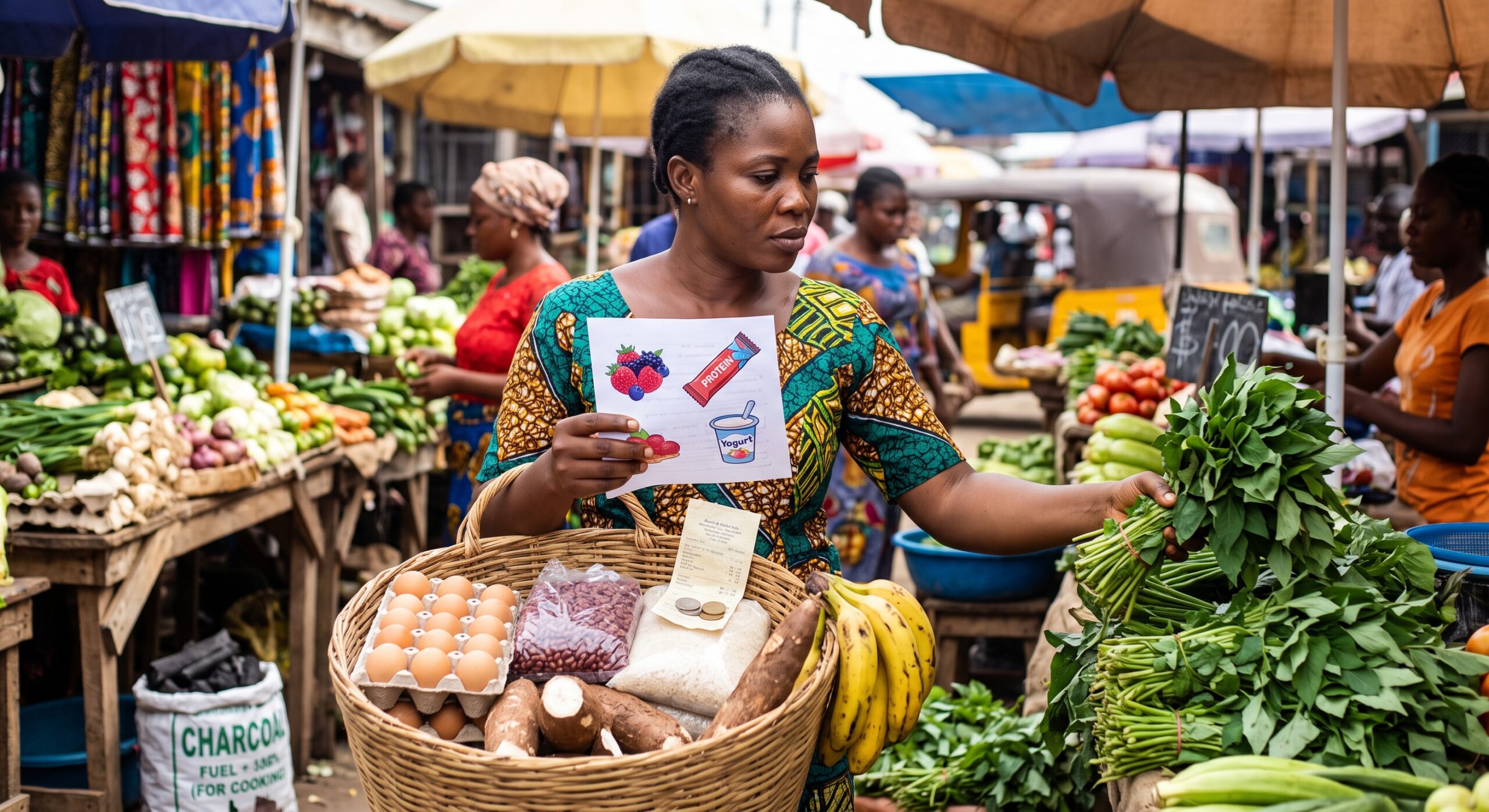
You enter the market with a meal plan written by someone who shops in another currency. The plan wants berries, protein bars and imported yoghurt. Your budget wants beans, eggs, seasonal greens and enough food to last until payday. The problem is not discipline. It is arithmetic.
Healthy eating advice often hides its real price
Food cost is more than the number on a shelf. It includes transport, cooking fuel, storage, spoilage, preparation time and whether a meal actually keeps you satisfied. FAO analysis across 11 African countries found that a healthy diet cost, on average, about 1.2 times more in urban centres than in peri-urban areas. Telling an exhausted city worker to simply choose better food ignores the environment shaping that choice.
|
EVIDENCE IN BRIEF Foods with more fibre, water and useful protein can improve fullness relative to highly energy-dense foods, but nutrition cannot be separated from affordability. A realistic healthy plate must satisfy four tests at once: nourishment, satiety, cost and repeatability. |
A price index that refuses to invent numbers
This index starts with a transparent basket, not fake city rankings. Readers submit dated receipts from named markets in Lagos, Accra, Nairobi, Johannesburg and other cities. Prices are compared per edible serving, with fuel and waste recorded separately. Only then do we publish the city table.
|
Basket job |
Affordable local candidates |
What the index records |
|
Staple energy |
Maize, millet, rice, cassava, yam |
Price per cooked serving |
|
Protein |
Beans, cowpeas, eggs, sardines, groundnuts |
Protein job + edible cost |
|
Produce |
Seasonal greens, cabbage, okra, carrot, fruit |
Price, waste and season |
|
Real-life cost |
Oil, spices, fuel, transport and time |
The costs diet plans omit |
Build the cheapest plate that still works
Start with one familiar staple, one affordable protein and two produce items that are genuinely available this week. Compare foods doing the same nutritional job – beans against another protein, not beans against biscuits. Batch-cook the slowest item. Freeze or share what will spoil. Skip imported fitness branding unless it solves a real need better than local food.
DEFINITION: The true cost of a meal is its purchase price plus transport, cooking fuel, preparation time and spoilage, divided by the number of edible, satisfying servings produced. Affordability does not mean that a food is cheap. It means a household can buy it, prepare it and repeat it without sacrificing another essential need. A diet plan that ignores income is not practical advice. It is a privilege list.
|
TRY THIS TODAY Price one ordinary balanced plate from your nearest market. Photograph the receipt, note the city, market and date, and calculate the cost per person, not merely the package price. |
What this does not mean: The cheapest calories are not automatically the healthiest, and the most expensive foods are not automatically superior. The question is: what combination can a household afford, enjoy and repeat? Send us your city receipt. Let us build the index in public.
Sources: WHO: Healthy diet
You may also Like
Africa’s Slimming Economy: Navigating Weight Loss Safely

Obesity: A Chronic Condition Beyond BMI