


The Real Cost of Savoury Oats: A Nigerian Budget Worksheet
- November 19, 2026
- by
- Khyra
The packet price cannot tell you what lunch costs. Use this transparent worksheet to compare a complete bowl with the food you actually buy.
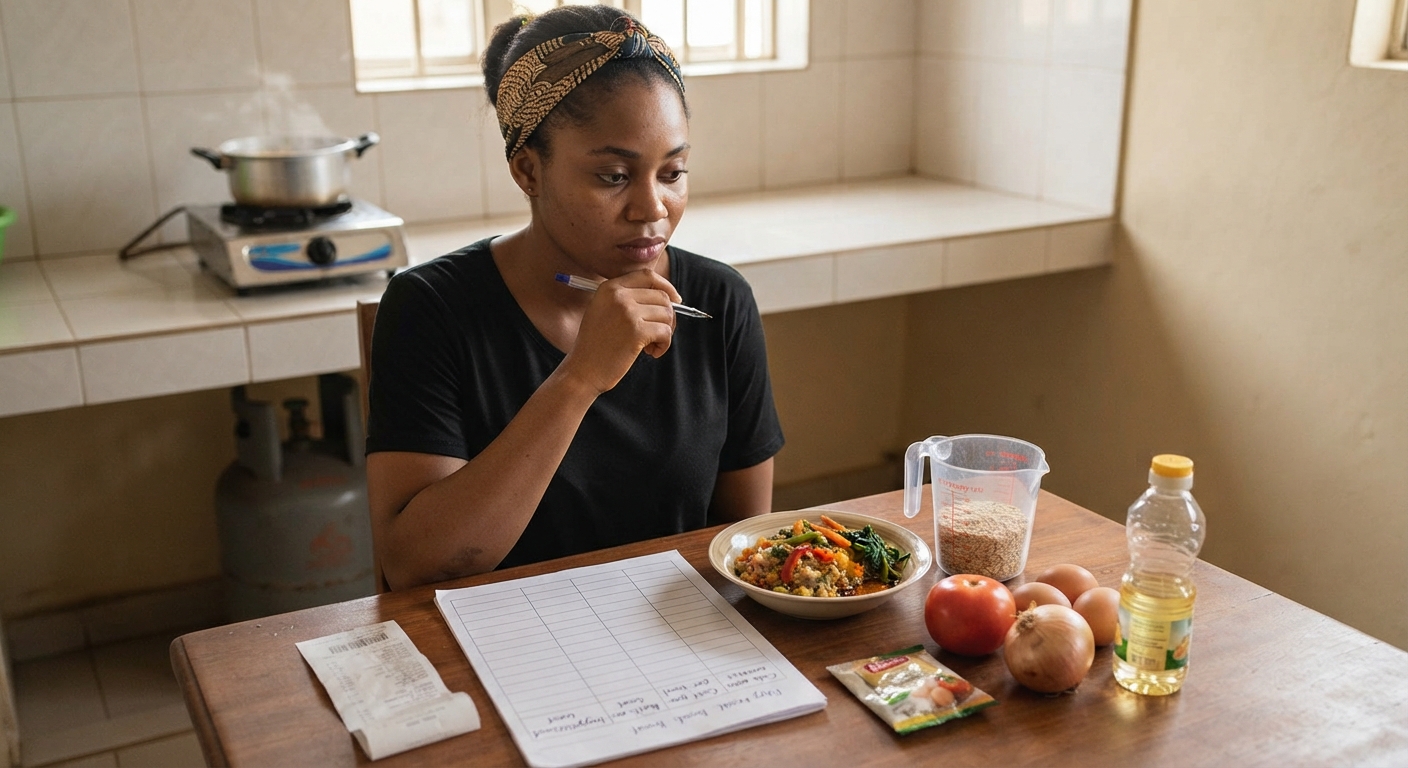
Imagine reaching a checkout in Ibadan. You have priced the oats, then remembered the eggs, vegetables and cooking gas. The budget recipe suddenly feels less straightforward. What will this meal cost before payday?
Online affordability claims often hide the shopping basket behind a photogenic serving. You may need money for a whole bottle of oil even when the recipe charges you for one spoonful. Cash needed today and ingredients consumed today are different numbers.
Affordability affects what reaches the plate
A meal supplies energy alongside nutrients; a low price alone does not establish nutritional adequacy. Removing every accompaniment may reduce spending while also removing useful variety. A sensible comparison asks what the complete meals provide and whether either fits the wider day’s eating. WHO’s dietary principles include adequacy, balance and diversity. This supports comparing meals rather than treating the cheapest grain as a complete answer.
FAO defines affordability in relation to resources left after other basic needs, not food prices alone. Its international indicator is not a quote for your kitchen. Khyra’s worksheet below is an original household accounting aid, not a validated nutrition index. Adding fuel and avoidable waste makes everyday costs more visible; it does not prove oats are cheaper than beans, pap or rice. That answer needs dated local prices and clearly described portions. [2]
The Khyra real bowl worksheet
|
Record |
Calculation or detail |
|
Ingredients used |
Pack price × quantity used ÷ pack quantity; add all ingredients. |
|
Batch cost |
Ingredients used + estimated fuel + attributable waste. |
|
Cost per bowl |
Batch cost ÷ actual servings; describe each serving. |
|
Cash and context |
Full checkout spend; city, shop, date, prep time and portions. |
Compare meals you would genuinely eat
1. Price your next meal. Use a receipt or vendor quote for oats, sauce, vegetables and an egg or cooked beans. until you collect them. Measure the sauce portion.
2. Separate spending from usage. List the full shopping bill beside the portion cost. If bulk buying exceeds your cash, compare the smaller pack rather than recommending debt for a theoretical saving.
3. Check a familiar alternative. Cost your usual beans, pap combination or rice meal using the same rules. Use seasonal vegetables and available proteins; a Lagos receipt cannot stand in for Kano, Accra or a London supermarket.
Try this today: Cost one complete serving using the packet label and your latest receipt. Record cooking minutes separately; estimate fuel honestly rather than presenting it as measured.
What this does not mean: A cheaper bowl is not automatically healthier or enough food for you. Do not shrink meals to meet an arbitrary price or weight target; therapeutic diets need individual guidance.
At that checkout, useful advice should survive the total on the till. Keep the receipt, not the shame. In your city, which costs less this week: a complete savoury oats bowl or your usual breakfast?
You may also Like

How to Make Savoury Oats Nigerian Style: Easy Bowl Guide
Savoury Oats & Weight Management: A Healthy Guide