



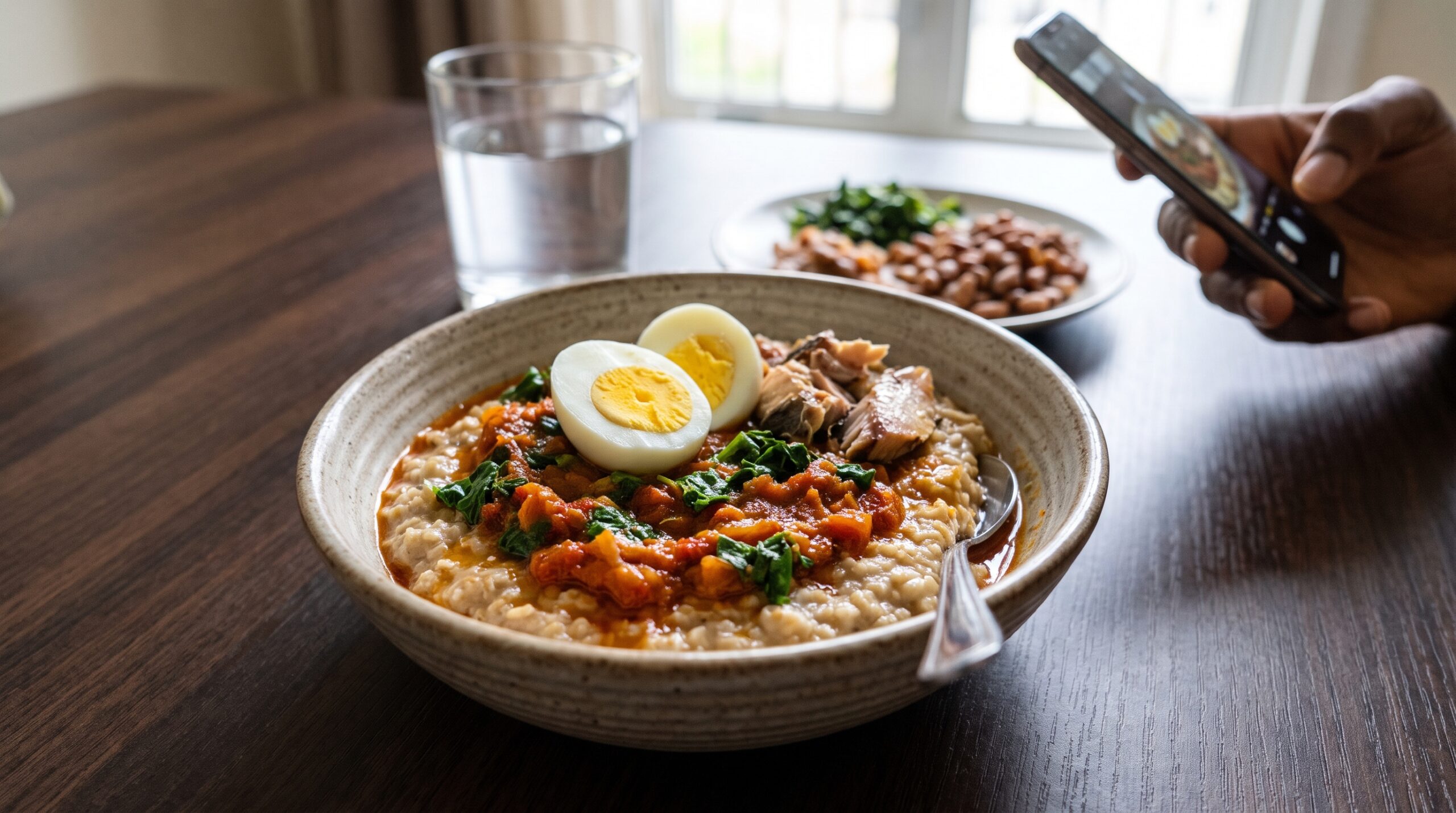
Savoury Oats & Weight Management: A Healthy Guide
- November 03, 2026
- by
- Khyra
Are Savoury Oats Healthy for Weight Management
A healthy label cannot assess an entire meal. Here is how to judge the grain, sauce and additions without turning breakfast into another body-image test.
Consider a Nigerian office WhatsApp thread: someone posts oats covered in sauce and asks whether it is allowed on a diet. One reply bans carbohydrates; another promises a flat stomach. Who gets to decide what this bowl means for your health?
When every meal becomes a public verdict, eating can feel exhausting. Obesity is influenced by biology, environment and circumstances, a breakfast photograph cannot diagnose effort, health or character. You deserve advice that examines the food without judging your body.
What the evidence can actually tell us
A 2023 systematic review pooled randomised trials of whole oats and isolated beta-glucan, the soluble fibre found in oats. Both interventions improved blood lipid profiles, including LDL cholesterol. LDL is a particle that carries cholesterol in the blood; lowering elevated levels can be a treatment goal. Those findings concern studied interventions, not this particular sauce or guaranteed changes in body weight.
In a separate randomised crossover trial, 48 adults received oatmeal and a ready-to-eat oat cereal on different occasions. Oatmeal produced greater fullness and lower intake at the lunch served four hours later. The industry-funded study tested short-term responses, not lasting weight loss, and its breakfasts differed in composition. It cannot establish that savoury oats outperform every Nigerian breakfast. Use these findings as reasons to consider oats, while judging your own complete meal and needs.
The Khyra claim check
|
Claim |
A more accurate reading |
|
Savoury oats burn belly fat |
No evidence presented here establishes targeted fat loss. |
|
Oats research proves this recipe works |
A grain intervention does not validate an untested sauce recipe. |
|
Sweet oats are always worse |
Compare ingredients and portions across the complete meals. |
Assess the bowl without policing yourself
1. Build variety. Add cooked beans, fish or a thoroughly cooked egg and a vegetable you can obtain. These choices contribute different nutrients; they are not exact substitutes. Familiar greens are welcome, and frozen vegetables can be practical where refrigeration is reliable.
2. Measure the additions once. Record the oil and seasoning used in your sauce and divide by actual servings. Taste before adding more salt. WHO recommends limiting sodium; stock cubes and other salty ingredients count too.
3. Review satisfaction. After eating, notice comfort and when hunger returns. If the meal leaves you hungry, adjust its quantity or composition rather than congratulating yourself for enduring it.
Try this today: Photograph your bowl for yourself and identify its grain, protein food, vegetables and sauce. Add one missing component if practical; no calorie-tracking app is required.
What this does not mean: Oats replace neither diabetes medicines nor cholesterol treatment. If you use insulin or medicines that can cause low blood sugar, discuss major carbohydrate changes with your clinician. Avoid self-directed restrictive diets during pregnancy or eating-disorder recovery.
That WhatsApp verdict can wait. Your next meal needs care, not a courtroom. Which oats claim would you ask your family group to check before forwarding?
You may also Like

One Sauce, Three Savoury Oat Bowls for Tired Cooks

Africa’s Slimming Economy: Navigating Weight Loss Safely