



Insulin Resistance: The Signs Nigerians Ignore & Belly Fat
- June 09, 2026
- by
- Khyra
You’re not overeating that much. You’re not lazy. You’re not undisciplined. Yet the belly won’t go.
Your face feels puffier. Your cravings are louder. Every time you try to diet, it works for two weeks, then your body fights back. You feel sleepy after rice. Tired after meals. Frustrated looking at the mirror.
You start wondering quietly: “Is something wrong with my body?”
Maybe. And nobody is talking about it loudly enough in Nigeria.
It’s called insulin resistance, and it’s silently affecting millions of Nigerians without them even knowing.
What Insulin Resistance Actually Is
Insulin is the hormone that helps move sugar from your blood into your cells for energy. But when the body is constantly overloaded with refined carbohydrates, sugary drinks, stress, poor sleep, and late-night heavy meals, cells stop responding properly.
Your body produces more insulin to compensate. High insulin doesn’t just regulate sugar it locks fat in. Especially belly fat.
So even when you try to diet, your body resists fat loss. Not because you’re lazy. Because your hormones are working against you.
10 Signs of Insulin Resistance Nigerians Ignore
1. Persistent belly fat even when dieting.
2. Extreme sleepiness after rice or swallow.
3. Constant cravings for sugar or bread.
4. Dark patches around neck or armpits.
5. Weight gain mainly around midsection.
6. PCOS symptoms in women.
7. Always hungry soon after eating.
8. Brain fog and afternoon crashes.
9. Family history of diabetes.
10. Losing weight then regaining it quickly.
How Insulin Resistance Locks Fat
|
Normal Metabolism |
Insulin Resistance |
|
Eat carbs |
Eat carbs |
|
Moderate insulin |
Excess insulin |
|
Sugar enters cells |
Cells resist insulin |
|
Energy used |
Fat stored |
|
Stable hunger |
Constant cravings |
Why It’s Increasing in Nigeria
Modern lifestyle creates the perfect storm: high refined carbs, oil-heavy meals, sugary drinks, stress, poor sleep, and sedentary routines.
It’s not Nigerian food alone, its frequency, portions, and lifestyle patterns working together.
Typical High-Insulin Nigerian Meal Example
|
Food |
Calories |
Insulin Impact |
|
3 wraps eba |
600 |
High |
|
Egusi soup |
500 |
Moderate |
|
Malt drink |
300 |
Very High |
|
Total |
1,400+ |
Massive spike |
How to Reverse Insulin Resistance (Practical Steps)
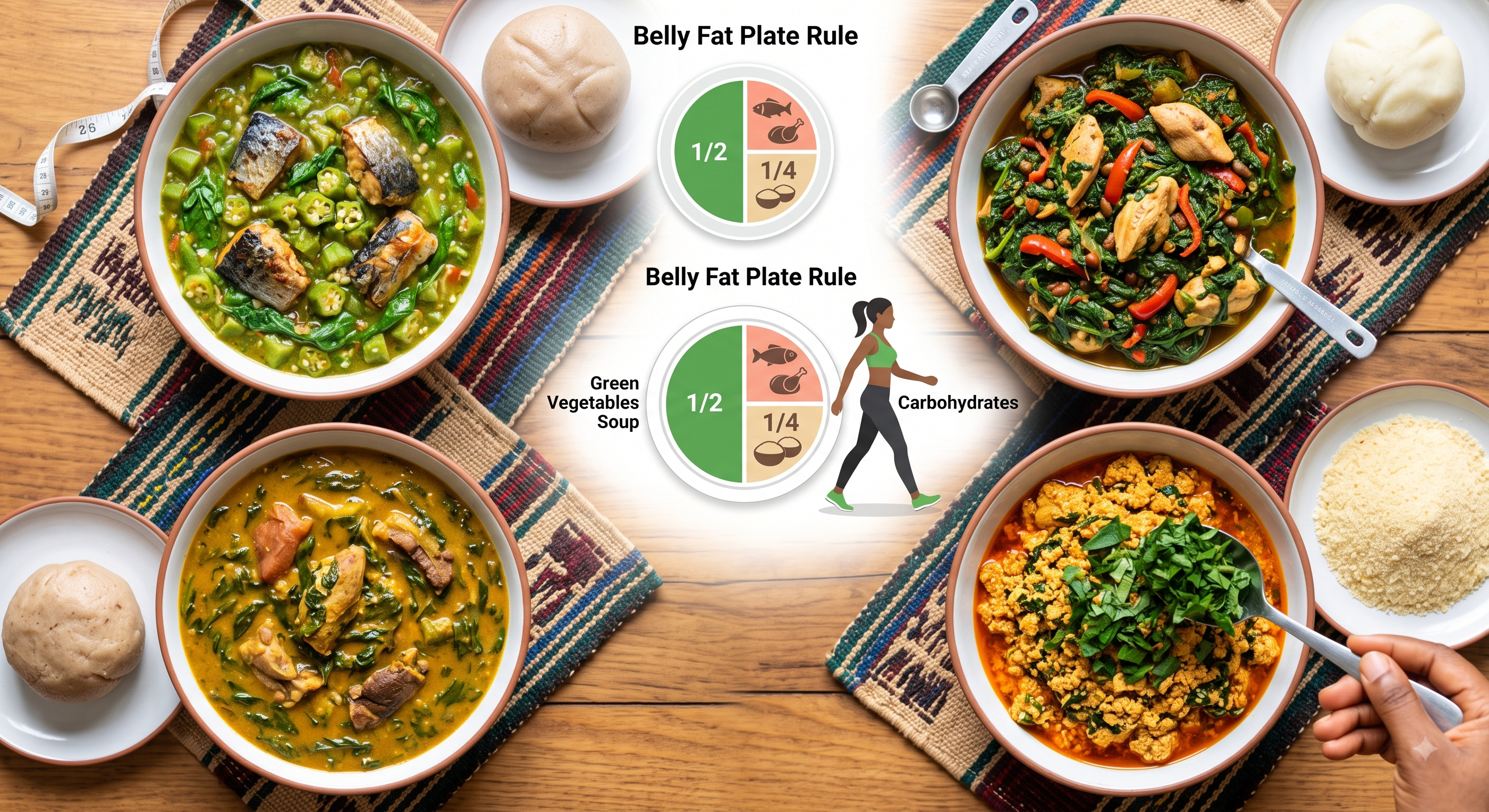
1. Eat protein first at meals; fish, eggs, chicken, beans.
2. Reduce liquid sugar immediately; malt, soda, sweet tea.
3. Walk 10–20 minutes after meals.
4. Avoid skipping meals then overeating at night.
5. Improve sleep quality and duration.
6. Add resistance training or daily movement.
Small consistent changes dramatically improve insulin sensitivity over time.
Scientific Rationale
Insulin resistance develops when chronic caloric excess and repeated glucose spikes force the body to produce high levels of insulin. Over time, cells become less responsive, leading to elevated insulin and increased fat storage, particularly around the abdomen. Research shows that increased protein intake, controlled carbohydrate portions, resistance exercise, post-meal walking, and improved sleep significantly enhance insulin sensitivity and metabolic flexibility. Structured lifestyle adjustments remain the most effective long-term strategy for reversing early insulin resistance and preventing type 2 diabetes.
Your body isn’t broken. It’s adapting. Once insulin balance improves, cravings reduce, energy stabilizes, and fat loss becomes easier. You don’t need extreme dieting, just structured, consistent changes. You don’t have to abandon your culture or foods. You just need strategy and awareness.
You may also Like

Obesity: A Chronic Condition Beyond BMI
Which Nigerian Soup is Best for Belly Fat?