

Calories in Jollof Rice: The Truth About Weight Gain
- June 15, 2026
- by
- Khyra
Let’s Be Honest for a Second…
You didn’t gain weight because of jollof rice.
You gained weight because nobody ever told you the truth about how Nigerians actually eat jollof rice.
You’ve tried everything. Skipping meals. Drinking detox tea. Promising yourself “no carbs this week.”
Then Sunday comes. Or Friday night. Or a random stressful Tuesday.
You find yourself staring at a plate of smoky, orange jollof rice… and the guilt starts before the first spoon even enters your mouth.
But here’s the uncomfortable truth nobody says out loud:
Jollof rice isn’t the real problem.
Portions, oil, and plate structure are.
Until you understand the real calorie math behind Nigerian jollof rice, using real portions you’ll keep feeling stuck.
Let’s fix that today.
The Problem: Why Jollof Rice Keeps You Stuck
Most weight-loss advice online is written for salads and sandwiches, not for jollof rice, fried plantain, chicken, and stew.
So you apply foreign diet rules to Nigerian meals… and it fails.
The real issue comes down to three things:
1. Portion blindness – “One plate” can easily mean 800–1,400 calories.
2. Hidden oil calories – Oil is extremely calorie-dense.
3. Combo eating – Rice + plantain + chicken + sugary drink = calorie overload.
Not because jollof is bad. But because portions are massive.
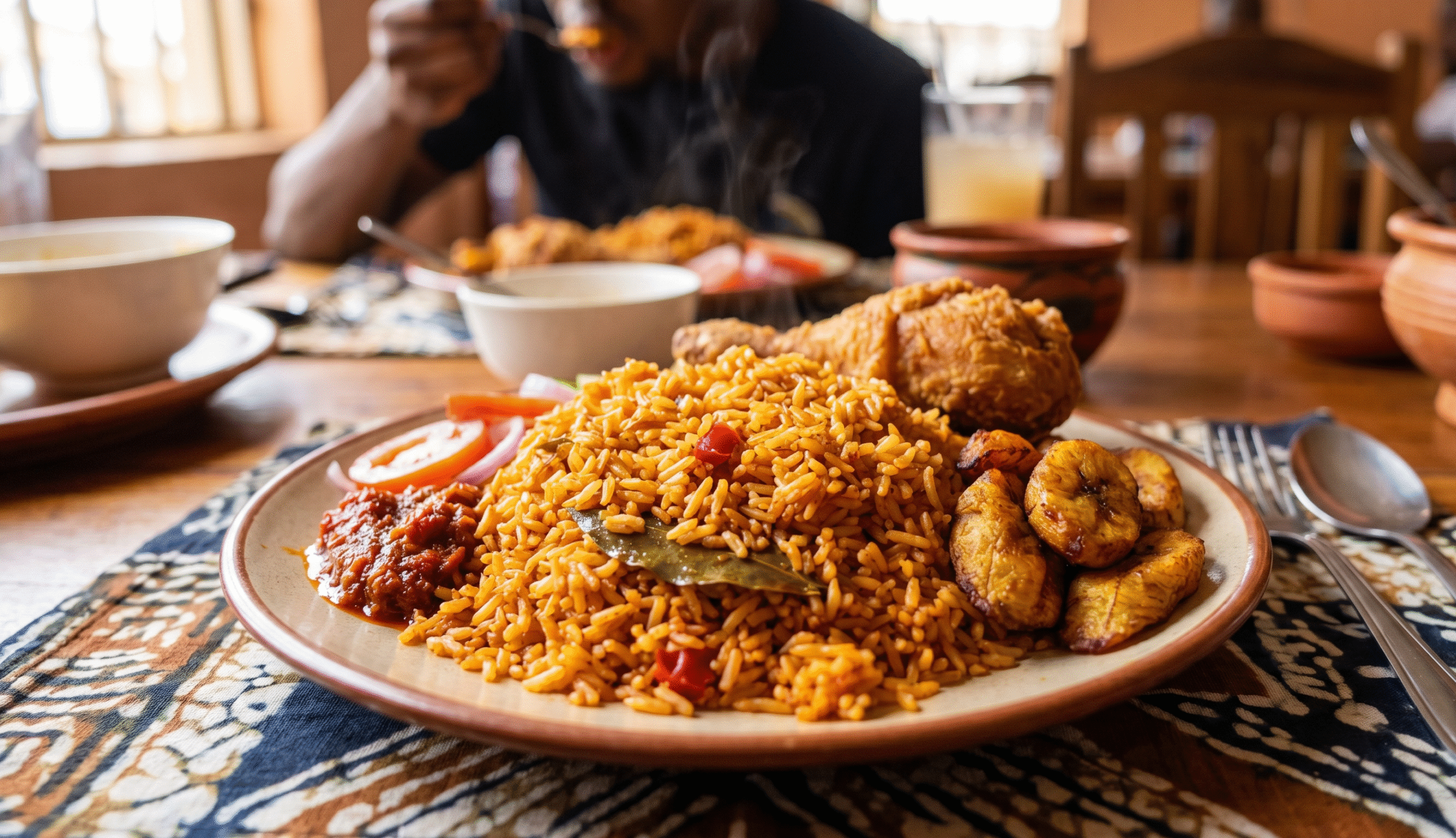
Let’s Talk Real Numbers: Calories in Jollof Rice (Nigerian Portions)
Below are realistic Nigerian serving sizes and their estimated calories:
|
Portion Size |
Estimated Calories |
|
1 small serving (1 cup) |
250–300 kcal |
|
1 medium plate (2 cups) |
450–600 kcal |
|
Large party plate |
700–900 kcal |
|
Full takeaway pack |
900–1,200 kcal |
Add-ons that increase calories significantly:
|
Item |
Calories |
|
Fried chicken piece |
250–350 kcal |
|
Grilled chicken piece |
180–250 kcal |
|
2 pieces fried plantain |
150–200 kcal |
|
Full side of dodo |
300–450 kcal |
|
Soda (Coke/Fanta) |
150–250 kcal |
Realistic Nigerian Plate Example
Example full plate:
• 3 cups jollof rice → 750 kcal
• Fried chicken → 300 kcal
• Fried plantain → 350 kcal
• Soda → 200 kcal
Total: Approximately 1,600 calories — nearly a full day’s intake in one meal.
The Solution: How to Eat Jollof Rice Without Gaining Weight
Step 1: Use the Plate Formula
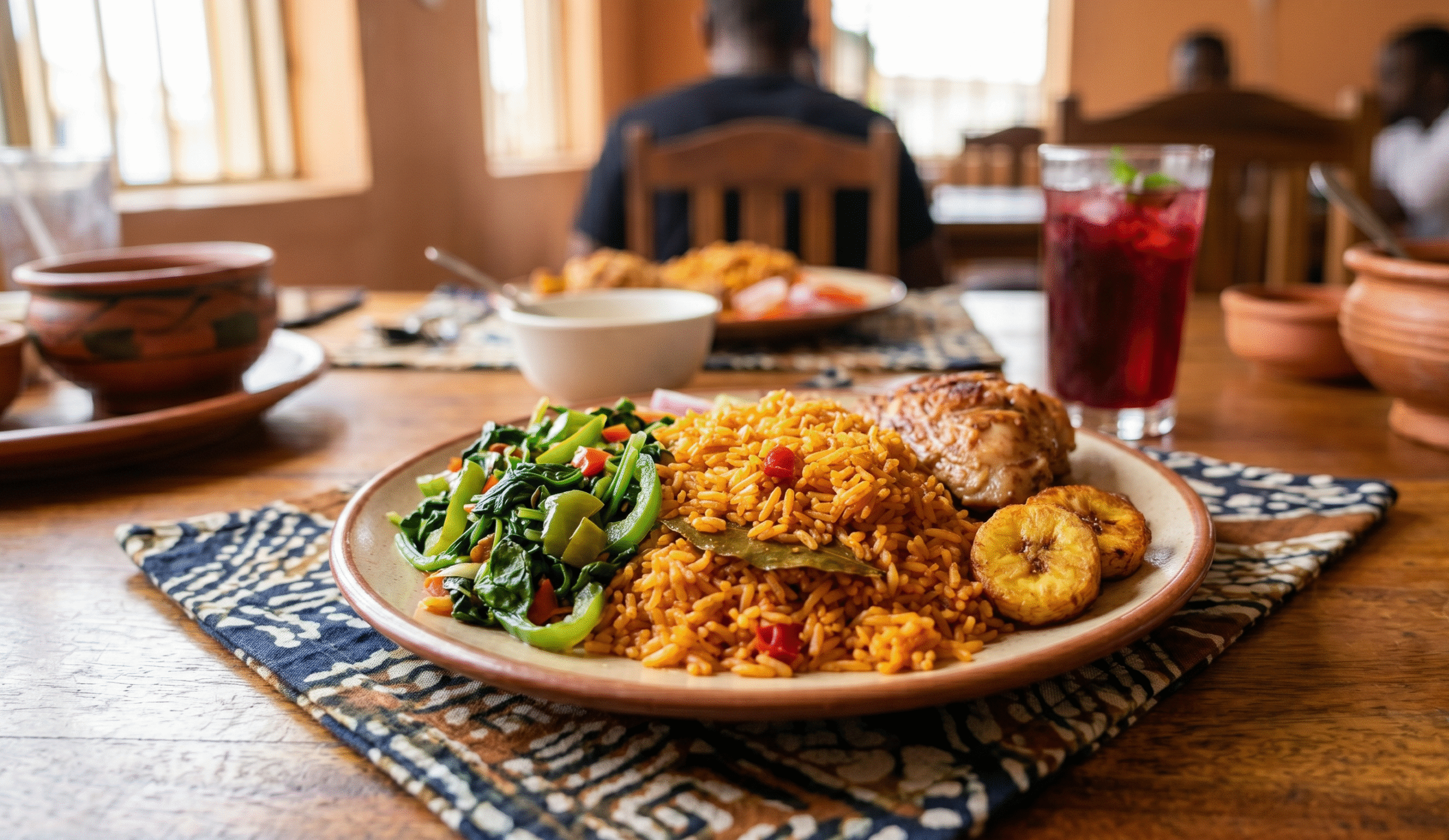
½ plate vegetables or protein
¼ plate jollof rice
¼ plate protein
Step 2: Control Oil
Measure oil when cooking. Avoid excess floating oil.
Step 3: Choose ONE combo addition
Rice OR plantain OR sugary drink, not all three.
Step 4: Eat Earlier
Carbohydrates are better tolerated earlier in the day or post-activity.
What the Science Says
Weight gain occurs when caloric intake exceeds energy expenditure over time. No single food causes fat gain, sustained caloric surplus does. Rice provides approximately 4 kcal per gram and functions as an energy source. However, when combined with high amounts of dietary fat from oils and fried foods, overall meal caloric density rises significantly. High-energy-density meals can override satiety signals, leading to excess consumption. Structuring meals with adequate protein and fiber improves satiety hormones and stabilizes blood glucose levels, supporting sustainable fat loss without eliminating culturally relevant foods such as jollof rice.
You don’t need to fear Nigerian food.
You need to understand portions.
Jollof rice isn’t ruining your progress.
Lack of awareness is.
Eat it. Enjoy it. Just structure it wisely.
You may also Like
One Sauce, Three Savoury Oat Bowls for Tired Cooks

Africa’s Slimming Economy: Navigating Weight Loss Safely