


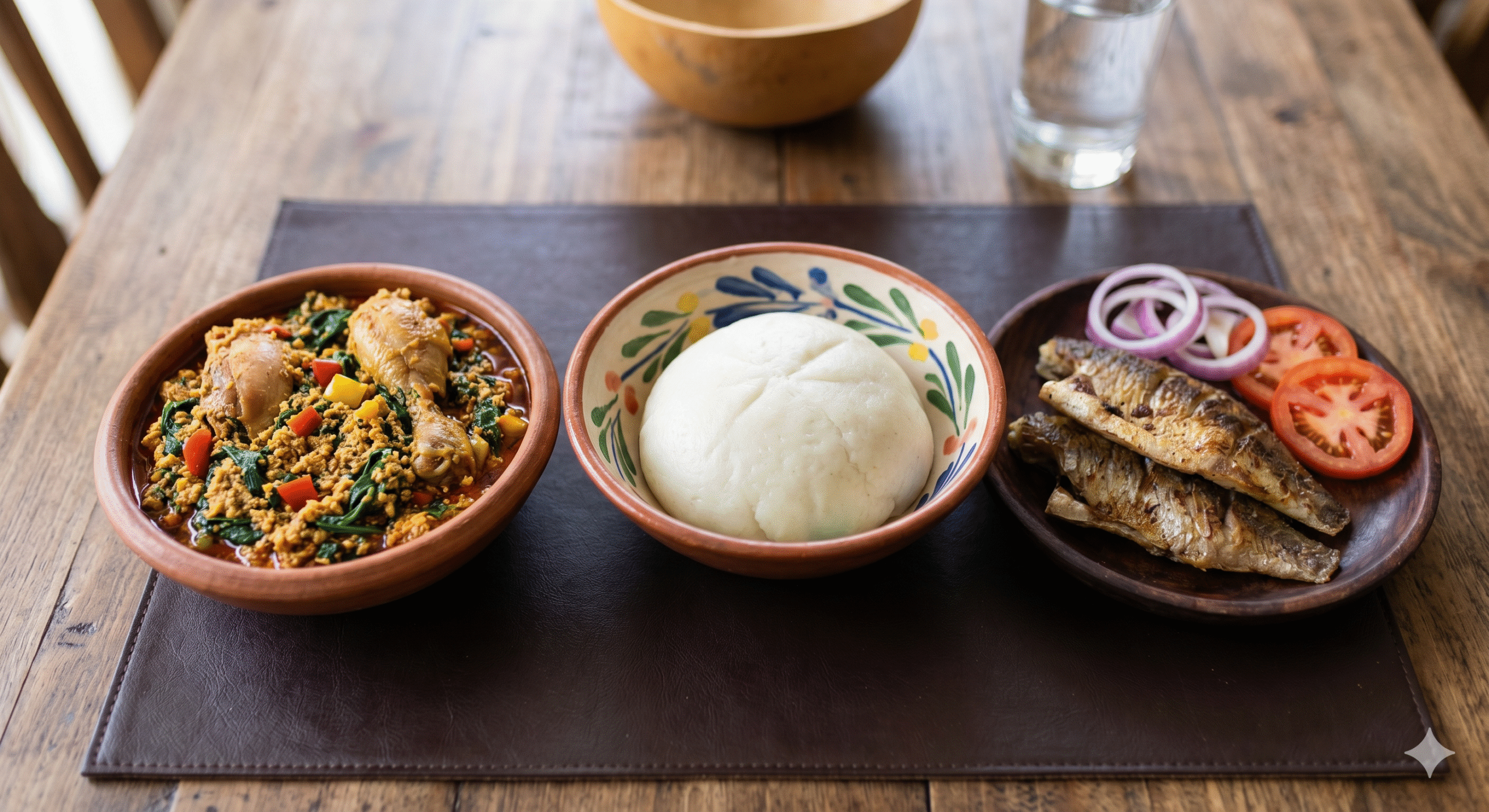
Calories in Swallow: Eba, Amala, Semo & Fufu for Weight Loss
- June 02, 2026
- by
- Khyra
Let’s Be Real for a Moment…
You don’t fear rice anymore. You fear swallow.
Every time you try to eat healthy, someone says: “If you want to lose weight, stop eating swallow.”
So you try. Oats. Eggs. Salads. Smoothies. You last a few days. Then one evening you’re tired, hungry, and emotionally drained — and that pot of soup is calling your name.
You give in. The first bite hits… and so does the guilt.
But here’s the truth: swallow itself isn’t the enemy. Portions, oil, and how you eat it are what keep you stuck.
The Problem: Why Swallow Keeps You Stuck
Swallow isn’t automatically fattening. The real issue is portion size, oil-heavy soups, and eating too quickly. Most people underestimate how much they’re actually consuming.
Common issues:
• Portion distortion – what feels like a small portion is often 2–3 servings
• Oil-heavy soups – egusi and ogbono can carry high hidden calories
• Fast eating – swallow is easy to overconsume before fullness registers
Calories in Popular Swallow (Real Portions)
|
Swallow (Medium Wrap) |
Estimated Calories |
|
Eba |
180–220 kcal |
|
Amala |
200–250 kcal |
|
Semo |
250–300 kcal |
|
Pounded Yam |
300–350 kcal |
|
Fufu |
220–300 kcal |
Soup Calories Matter More
|
Soup (1 serving) |
Estimated Calories |
|
Egusi |
400–600 kcal |
|
Ogbono |
350–500 kcal |
|
Vegetable Soup |
250–400 kcal |
|
Okra |
200–350 kcal |
The Solution: How to Eat Swallow and Still Lose Weight
Step 1: Follow the 2‑Wrap Rule
Limit to two moderate wraps if fat loss is your goal.
Step 2: Choose soups wisely
Rotate lighter soups like okra and vegetable soup. Reduce oil when cooking.
Step 3: Eat protein first
Start with fish, chicken, or meat before swallow to reduce overeating.
Step 4: Avoid very late heavy meals
Eat swallow earlier in the day or after activity for better metabolism.
Evidence‑Based Scientific Rationale
Weight gain occurs when caloric intake consistently exceeds energy expenditure. Swallow foods are primarily carbohydrate sources with moderate caloric density, but the soups they accompany often contain significant oil, increasing total meal calories. High‑fat, high‑carbohydrate combinations are easy to overconsume and delay satiety signaling. Research shows that portion control, protein prioritization, and slower eating improve satiety hormone responses and reduce overall calorie intake. Structured portions allow fat loss without eliminating culturally relevant foods.
You don’t need to abandon swallow to lose weight. You need structure. Control portions, reduce oil, and eat mindfully. You can enjoy your food and still take your body back.
You may also Like
Africa’s Slimming Economy: Navigating Weight Loss Safely

What Does a Healthy African Plate Really Cost?