
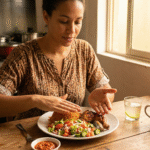

Master Portion Control with the African Palm-and-Plate Rule
- March 31, 2026
- by
- Khyra
You know that moment when you dish food, intending to “just taste,” and suddenly your plate looks like you’re auditioning for a feasting competition?
Or when you serve stew and swallow and quietly wonder: “Did I take too much again… or too little?”
It’s the unspoken dilemma, wanting to eat in a way that feels satisfying, but not walking away heavy, sleepy, or guilty.
Yet most people don’t talk about it because portion control is often framed as a moral failing instead of what it really is—confusing, emotional, and deeply cultural.
If that sounds familiar, breathe. This isn’t a scolding session. Your kitchen habits didn’t appear overnight; they were shaped by comfort, tradition, hunger cues, and sometimes simply “eat before someone else takes more.” Enter a beautifully simple idea rooted in African food wisdom:
The Palm-and-Plate Rule: Your palm guides your portion, your plate keeps the peace.
It’s not a diet. It’s not calorie counting.
It’s a grounded, memorable way to eat that millions instinctively grew up seeing but never named.
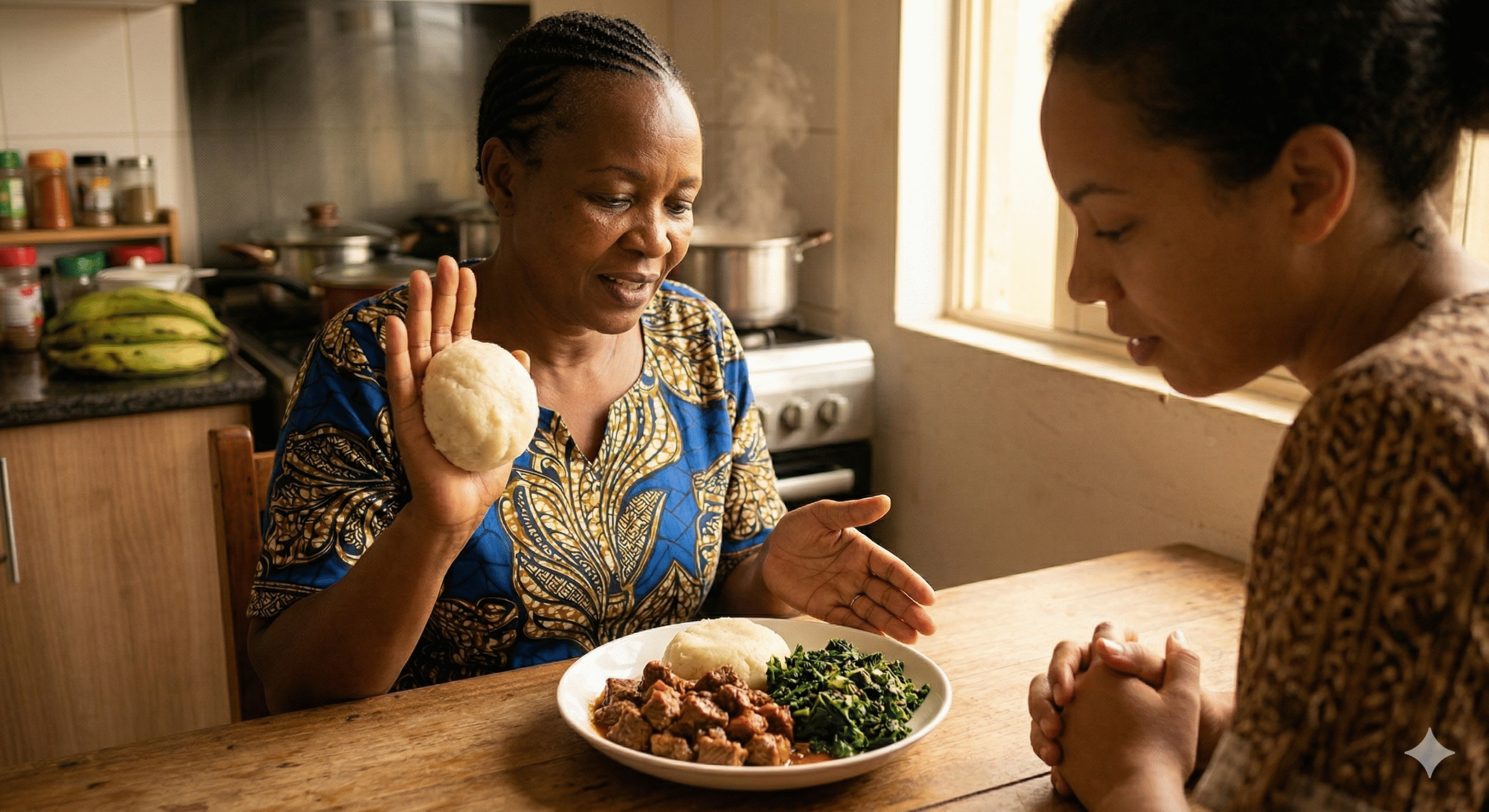
Think of aunties who scoop amala with an instinctive curve of the hand, or Ghanaian mothers measuring kontomire stew “by palm not by spoon.”
Traditional cooks everywhere, from Tunisian couscous mamas to home chefs in Kerala — often size ingredients and servings with palm estimates. Now, modern nutrition research nods to this too: your palm roughly matches what your stomach comfortably handles at a time. Science meets heritage, what a satisfying alignment.
Why the Palm-and-Plate Rule Works (The Easy Science Version)
Your stomach is about the size of your two fists together.
It’s stretchy, yes, but happiest when it receives portions that match its natural capacity.
Hands are personal, they scale with your bone structure, metabolism, and energy needs. So using your palm as a serving guide is like a built-in measuring tool you carry everywhere.
African food philosophy already knew this — using eyeballing, rhythm, and hand-feel instead of strict measurement.
Modern dietitians call this “mindful portioning.”
Our grandmothers called it “don’t serve more than your hand can handle.”
Same truth, different language.
How to Practice the Palm-and-Plate Rule
Here’s the fun part — no weighing scales, no apps, just… you.
Step 1: Start With Your Palm
Before dishing food, glance at your palm.
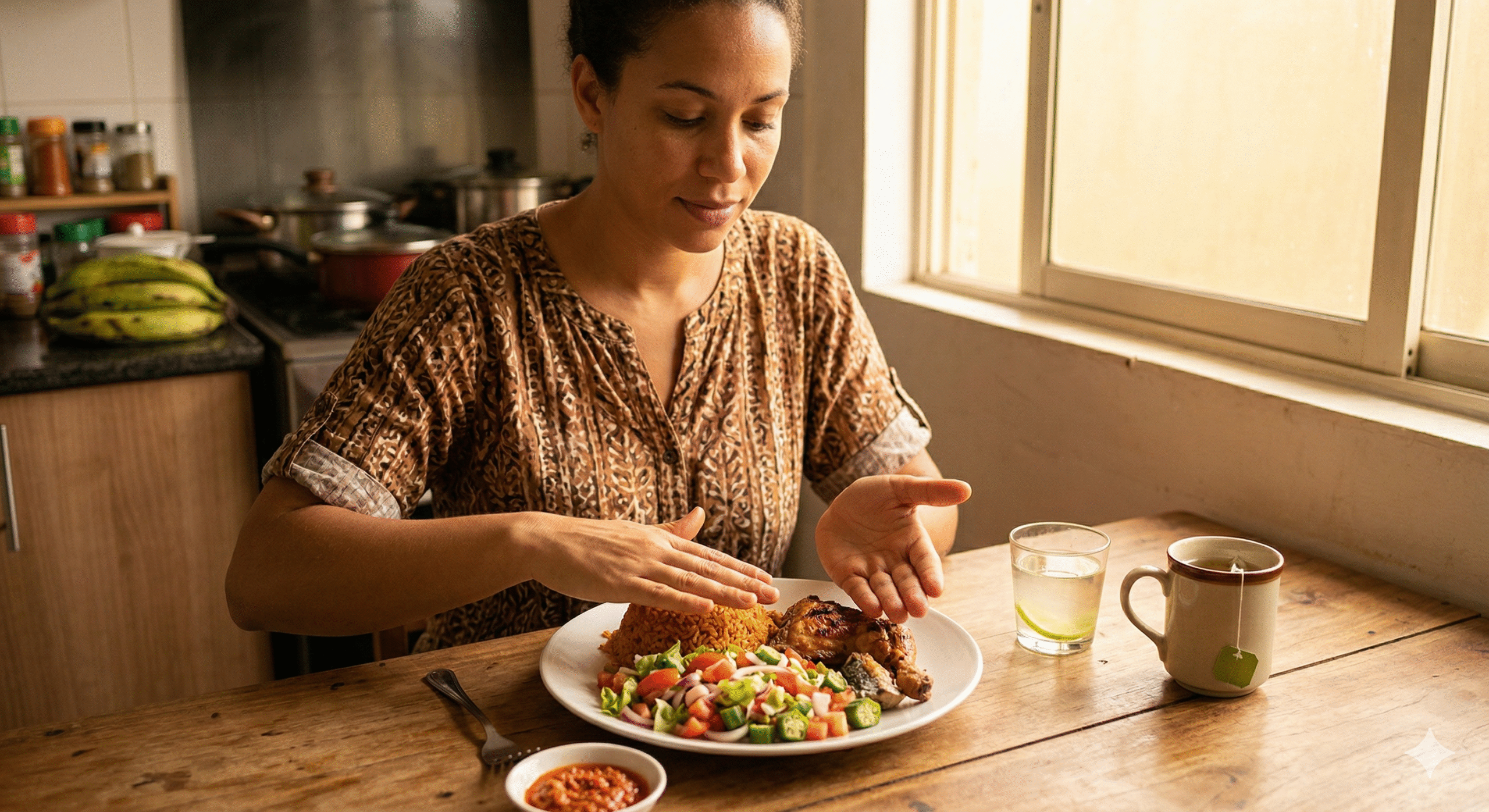
Your palm (without fingers) = the portion size of your main food (e.g., rice mound, maize fufu, pasta, beans, yam cubes).
Think:
- One palm of jollof rice
- One palm of plantain cubes
- One palm of pasta
Step 2: Add a Protein the Size of Your Palm Thickness
Your palm’s thickness = your protein portion per meal.
So:
- Chicken thigh
- Fish fillet
- Beans stew
- Tofu or chickpeas scoop
Not tiny, just what fits your palm depth.
Step 3: Let Your Plate Be Your Boundary
Half the plate: colourful vegetables – sautéed ugu, slaw, kachumbari, okra sauce, stir-fried greens, anything vibrant.
The rest? Palm-sized main + palm-thickness protein.
Simple. Balanced. No punishment.
Step 4: Honour the Pause
After eating, sip something light – ginger water, mint tea, hibiscus, or lime-infused warm water.
Let your stomach sigh in relief before deciding whether you want more.
Where Tradition Shows Up Beautifully
Across cultures, versions of this instinctive measuring exist:
Nigeria: “If it sits well in your palm, it sits well in your belly.”
Ethiopia: Injera tear sizes are palm-guided.
Japan: Bento boxes divide portions harmoniously.
Mexico: Tortilla sizing mirrors the palm.
Italy: Pasta serving is guided by handfuls, not buckets.
So you’re not inventing something new, you’re practicing what communities always intuitively knew.
The Best Part: This Isn’t About Shrinking Yourself It’s about:
✔ eating without heaviness
✔ feeling energised instead of sluggish
✔ ending days without bloated regret
Portion control shouldn’t feel like discipline, it should feel like comfort, the way just-right soup feels on a tired night.
This rule isn’t meant to restrict, it’s meant to restore balance.
You may also Like
How to Make the ‘Spice-and-Sip Detox Broth’ for Bloating

How to Visit Family Without Ruining Your Fitness Progress