

Exercise for Fibroids & PCOS: Training for Your Hormones
- February 09, 2026
- by
- Khyra
Let’s be honest, trying to “get fit” when you have fibroids or PCOS can feel like carrying a brick in your stomach while the whole world shouts, “Just try harder.”
You’re tired but you push. You finally work out, and instead of feeling strong, you feel bloated, crampy, moody, and defeated. Someone tells you to “go harder,” but they don’t know what it feels like when your hormones feel like they’re fighting you from inside your own skin.
It’s frustrating. And sometimes you question your own body like, “Why can’t I just respond like everyone else?”
Because you’re not everyone else and you shouldn’t be training like you are.

❗The Real Problem
You’ve been fed two extremes:
- Team Hustle: “Lift heavy, HIIT, no excuses, pain is weakness leaving the body.”
- Team Fear: “Don’t exercise at all, you’ll worsen your condition.”
Both are wrong. Dangerous, even.
The real barrier?
No one teaches women with fibroids or PCOS how to train for hormonal reality. You’re trying to follow workout plans made for perfectly balanced hormones, steady energy, and zero inflammation when YOUR body is fighting stress, pain, and unpredictable cycles.
So you burn out. You stop. Then you blame yourself.
The Fix: Gentle Strength + Anti-Stress Movement
You don’t need to “kill it.” You need to train smart, not punish your body.
Do more of:
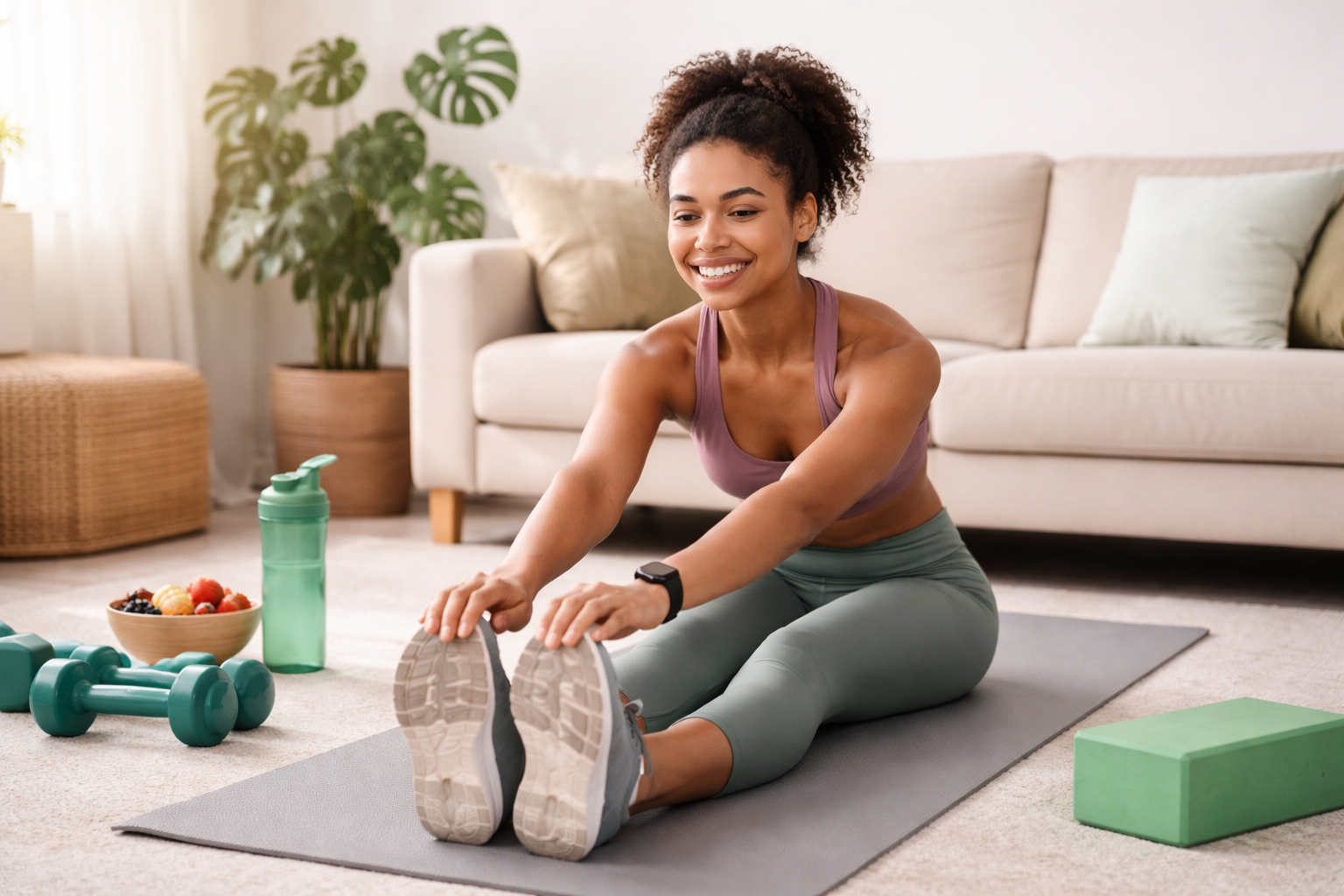
✔️ Strength training (moderate weights, slow reps — 2–4x weekly)
✔️ Walking / light cardio (30–45 mins — daily or near daily)
✔️ Pilates or Yoga (for stress, core, pelvic health)
✔️ Breathwork & mobility (5–10 mins daily to regulate cortisol)
Avoid or reduce when flaring or fatigued:
❌ Excessive HIIT
❌ Long fasting + intense workouts
❌ Back-to-back high-stress training days
❌ Belly-focused crunches when fibroids trigger pelvic pressure
This isn’t softness. It’s strategy.
The Science (Quick & Clear)
Women with PCOS and fibroids often deal with higher cortisol, insulin resistance, chronic inflammation, and estrogen imbalance. High-intensity training increases cortisol and can worsen hormonal symptoms when overdone.
However, strength training + moderate cardio improves insulin sensitivity, boosts metabolism, improves mood, and supports hormone regulation without overstressing the system. Research also shows that stress-moderating exercises like yoga reduce pelvic pain and lower inflammatory markers.³
Translation?
Your hormones aren’t the enemy, unmanaged stress and the wrong training style are.
Real Talk
This journey isn’t about shrinking yourself. It’s about supporting a body that’s already fighting hard.
You don’t need to prove your toughness.
You don’t need to “keep up.”
You need a plan that honors your biology.
Strong, steady, consistent.
That’s your lane now.
And if someone says, “Why aren’t you doing HIIT?”
Just smile, they don’t know what it’s like to train with ovaries on hard mode.
Your pace is valid.
Your progress counts.
And your body deserves peace AND power, not pain disguised as fitness.
You may also Like

Obesity: A Chronic Condition Beyond BMI
Which Nigerian Soup is Best for Belly Fat?